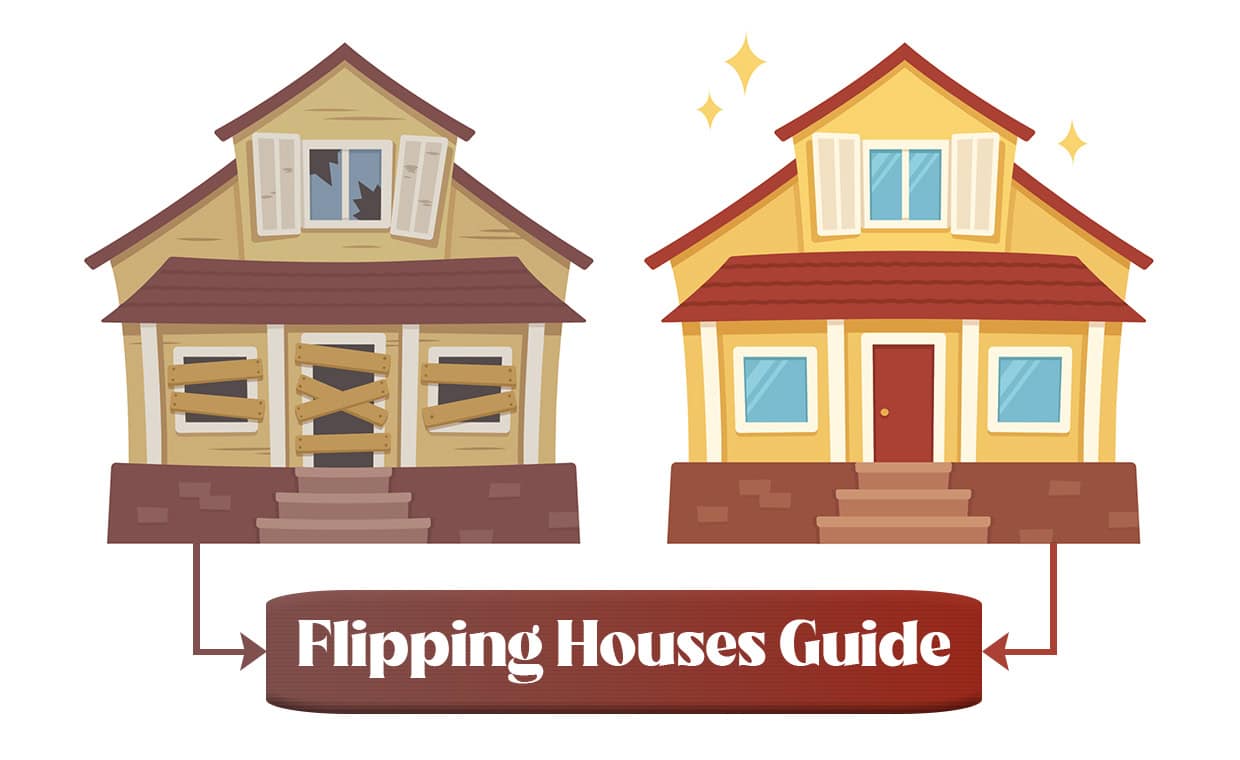
Every few months, a client sits across from me and asks the same question: should I try flipping property instead of just buying a home to live in or rent out? With HGTV making it look like a weekend project and a fresh coat of paint, it’s an understandable question. But after helping buyers and investors across Turlock and Stanislaus County for years, I can tell you the real answer depends on your cash, your stomach for risk, and your relationship with a calendar.
This post breaks down what flipping property actually costs, what the 2026 numbers really look like nationally and here at home, and how to know honestly whether it’s a fit for you — or whether you’re better off buying and holding, or just buying a house to live in.
What Does “Flipping Property” Actually Mean?
Flipping property means buying a home — usually one that’s outdated, distressed, or underpriced — fixing it up, and reselling it fast, typically within a year. It’s different from buy-and-hold investing, where the goal is rental income and long-term appreciation rather than a quick resale.
The appeal is obvious: buy low, renovate smart, sell high, repeat. The reality is that flipping property is a business, not a hobby, and it behaves like one. You need capital, contractors, a market that cooperates, and a plan for what happens when any of those three lets you down.
The National House Flipping Numbers for 2026
Before you decide if flipping property is for you, it helps to see what’s actually happening in the market. According to ATTOM’s Q1 2026 home flipping report, investors nationally flipped 64,348 single-family homes and condos in the first quarter, with an average gross profit of $66,000 and a gross ROI of 25.4% — up slightly from 24.7% the previous quarter, after several quarters of declining returns.
California tells a slightly different story. The same ATTOM data shows 5,774 California flips in Q1 2026, representing 8.5% of all sales, with a higher dollar profit of $124,437 but a lower percentage ROI of 19.5%, down from 19.8% a year earlier. That gap matters: bigger home prices mean bigger dollar profits, but also bigger dollar risk if a flip stalls.
The Motley Fool’s 2026 house flipping statistics add more context, noting that flip profitability declined for six straight quarters before recently stabilizing, and that returns vary enormously by metro. Some Bay Area markets are still posting strong dollar profits, while a handful of markets nationally are showing flippers actual losses. In other words, “flipping property is profitable” is not a blanket statement — it’s a market-by-market, house-by-house question.
What Flipping Property Looks Like in Turlock Right Now
Locally, the numbers still favor sellers, which changes the math for anyone flipping property here. As of mid-2026, Turlock’s median home price sits around $485,000, with homes averaging just 26 days on market and only about 1.9 months of housing inventory — a tight, seller-favored market by almost any measure. Homes are selling at roughly 99% of asking price, and prices are forecast to rise another 2–4% over the next year.
For a flipper, tight inventory cuts both ways. On one hand, a well-renovated home in Turlock or greater Stanislaus County tends to sell quickly once it hits the market — that 26-day average is good news on the exit. On the other hand, low inventory means fewer distressed, underpriced properties to buy in the first place, and more competition (including from other investors) when one does show up. I keep a running list of current Turlock listings that fit an investor profile, since the best flip candidates here often move before they’re widely marketed.
If you’re weighing whether flipping property makes sense in this specific market, I’d encourage you to start with a real look at comparable sales rather than a gut feeling. I regularly run free home valuations for buyers and investors trying to pencil out a potential flip before they ever make an offer.
A second data point backs this up: Zillow’s Turlock home values index put the typical local home at $447,674 as of late April 2026, essentially flat year-over-year, with homes typically going pending in about 15 days and a modest 1.1% appreciation forecast for the coming year. Read together with Houzeo’s numbers, the picture is consistent: Turlock isn’t a market where home values are running away from you, but it’s also not a market handing out deep discounts on distressed inventory. Whatever you pay for a flip here, you’re likely paying close to fair value going in, which puts even more pressure on getting your renovation budget and after-repair value estimate right.
The 70% Rule: How Experienced Flippers Decide What to Pay
Most flippers use some version of the 70% rule to avoid overpaying. As Lima One Capital explains, the formula is: Maximum Allowable Offer = (After-Repair Value × 0.70) − Repair Costs.
So if a home will be worth $300,000 after repairs and needs $45,000 in renovation work, the math looks like this: ($300,000 × 0.70) − $45,000 = $165,000. That’s the most a disciplined flipper should pay, with the remaining 30% of after-repair value covering closing costs, holding costs, financing costs, and actual profit.
The 70% rule is a guideline, not gospel — in a tight market like Turlock’s, some experienced investors flex closer to 75–80% on properties that need very little work. But if you’re new to flipping property, sticking closer to 70% gives you a real margin for the surprises every renovation eventually produces.
The Real Cost Breakdown of a Flip
The 70% rule only gets you the maximum offer — it doesn’t show you where the money actually goes once you own the property. According to AmeriSave’s 2026 cost breakdown for flipping houses, experienced flippers typically budget 20–33% of a property’s after-repair value for renovation and related costs on top of the purchase price itself.
On a median-sized flip — roughly a $259,000 purchase resold around $325,000 for a $66,000 gross profit — actual costs (renovation, closing costs on both ends, real estate commissions, and holding costs) commonly run $65,000 to $107,000, leaving a thin or even negative net profit once everything is counted. Closing costs alone typically run $6,000 or more at purchase, plus 5–6% in commissions at resale.
Carrying costs add up fast too: with the average flip taking around 163 days from purchase to resale, and monthly holding costs (loan interest, property taxes, insurance, utilities) often running $2,500 or more, a flip that drags into month five or six can quietly lose $12,500 or more in carrying costs alone. The article’s blunt conclusion is worth repeating — flip margins nationally have compressed to some of their lowest levels since the 2008 financial crisis, which is exactly why disciplined budgeting matters more now than it did a few years ago.
How Flippers Pay for It: Hard Money and Fix-and-Flip Loans
Financing is where a lot of first-time flippers get caught off guard. Conventional mortgages are built for buyers who intend to live in a home, not for a six-month renovation-and-resale project, so most flippers use hard money or fix-and-flip loans instead.
According to Crestmont Capital’s 2026 rate data, fix-and-flip loans currently run 9–12% interest for experienced borrowers, plus 1–3 origination points, with maximum loan-to-value around 70–75% of after-repair value and typical terms of 6–18 months. All-in, total financing costs often run 15–25% annualized once fees are included — a real number that needs to be built into your budget, not an afterthought.
Compare that to where traditional mortgage financing sits: Bankrate reports the average 30-year fixed rate at 6.69% as of August 17, 2026. That gap between a 6.69% owner-occupant mortgage and a 9–12% flip loan is exactly why holding costs matter so much — every extra month a flip sits unsold eats directly into your profit.
How Often Do Flips Actually Fail?
This is the statistic that should give every first-time flipper pause. According to We Lend’s 2026 house flipping success rate data, roughly 88% of flips nationally sell above their original purchase price on a gross basis — but that figure doesn’t account for rehab, holding, and transaction costs, which typically run 20–33% of a property’s value. Once those costs are factored in, the real success rate looks very different.
The experience gap is even more striking. That same data shows only about 30% of first-time flippers actually turn a profit once all costs are counted, meaning roughly 70% of newcomers break even or lose money on their first project. Experienced investors, by contrast, succeed on 85–90% of their flips. That gap is exactly why partnering with a realtor and a contractor who know the local Turlock market before you buy is worth far more than it costs.
The Tax Bill Nobody Talks About
This is the part that surprises the most first-time flippers: profits from flipping property are usually not taxed like a typical home sale. If the IRS considers you a “dealer” rather than an investor — which most active flippers are — your profit is taxed as ordinary business income, not as a capital gain, regardless of how long you held the property.
As SmartAsset explains in its house flipping tax guide, that means ordinary income tax rates up to 37%, potential self-employment tax on top of that, and no access to two of the biggest tax breaks in real estate: the Section 121 primary residence exclusion and the 1031 exchange, both of which are generally off-limits to properties held primarily for resale.
That doesn’t make flipping property a bad idea — it just means your real, after-tax return is meaningfully lower than the headline ROI numbers you see in flipping shows or online calculators. Talk to a CPA who understands real estate dealer status before you assume your profit is “capital gains.”
Five Signs Flipping Property Might Be for You
You have cash reserves beyond the purchase price. Between the 70% rule’s built-in margin, hard-money financing costs, and unexpected repairs, you need a real buffer — not just enough to close.
You have (or can hire) reliable contractors. Renovation delays are the single biggest killer of flip profits, since every extra month adds holding and financing costs.
You understand your local market at the street level, not just the city level. In Turlock, a flip two blocks apart can have very different resale ceilings.
You can tolerate risk and a variable income. Unlike a salary, flip profits (and losses) are lumpy and unpredictable.
You’re doing this as a business, with a real budget, timeline, and exit plan — not as a passion project.
Five Signs You Might Be Better Off Buying and Holding — or Just Buying a Home
You want predictable, passive income rather than active project management — a rental property or REIT may suit you better than flipping property.
You don’t have six figures in liquid reserves. Thin margins plus hard-money rates are a stressful, risky combination.
You’re emotionally attached to design choices. Flippers renovate for the broadest possible buyer, not their own taste.
You’re actually looking for a home to live in. If that’s you, a traditional purchase — not a flip — is the right move, and I’m happy to walk you through what to expect as a buyer in today’s market.
You don’t have time to manage contractors, permits, and a resale timeline on top of your regular job.
Common Mistakes That Turn a Flip Into a Loss
Even experienced investors get burned by predictable mistakes: underestimating renovation costs, skipping a thorough inspection before closing, misjudging the after-repair value for the neighborhood, or holding a property too long while financing costs quietly eat the profit.
The single biggest mistake I see locally is buying based on a national flipping show’s numbers instead of Turlock’s actual comps. A renovation budget or profit margin that works in a $300,000 national “average” market doesn’t automatically translate to a $485,000 Stanislaus County listing.
Other recurring mistakes I see: not building a contingency fund into the renovation budget for the surprises that always show up once walls come open (old wiring, foundation issues, permit delays); pulling comps from too wide a radius instead of the actual block or subdivision; and underestimating how much curb appeal and staging affect the final sale price relative to the cost. None of these mistakes are exotic — they’re just the details that get skipped when someone is moving fast and excited about a deal.
Flipping Property vs. Buying and Holding a Rental
Not every investor needs to choose flipping property at all. Buy-and-hold rental investing — purchasing a Turlock home and renting it out for years while it appreciates — trades the fast, active work of a flip for slower, more passive income and a longer runway to build equity.
The two strategies suit different personalities and different financial situations. Flipping property rewards someone who wants a lump-sum payout on a shorter timeline and doesn’t mind managing a renovation like a part-time job. Buy-and-hold rewards someone who wants steady cash flow, is comfortable being a landlord, and is fine waiting years rather than months to see the bulk of their return.
If you’re not sure which path fits your goals, that’s a conversation worth having before you tie up capital either way. I regularly help clients compare both strategies against current Turlock market reports and available inventory before they commit to a plan.
So, Is Flipping Property for You? My Take as Your Turlock Realtor
Flipping property can absolutely work — the 2026 numbers prove people are still doing it profitably, both nationally and right here in California. But it works best for people who treat it like a business: real reserves, a trustworthy contractor, a realistic renovation budget, and a clear-eyed view of financing costs and taxes before they ever make an offer.
If you’re weighing flipping property against buying a rental, or against simply buying a home for your family, the right first step is the same either way: get an honest read on current comps and inventory in the neighborhoods you’re considering. That’s exactly what I help clients with every day across Turlock and Stanislaus County.
If you’re ready to talk through numbers on a specific property, or just want a second opinion before you make an offer, please reach out or call me directly at 209-620-4142. I’m happy to run the comps with you before you decide whether flipping property is really the right move.