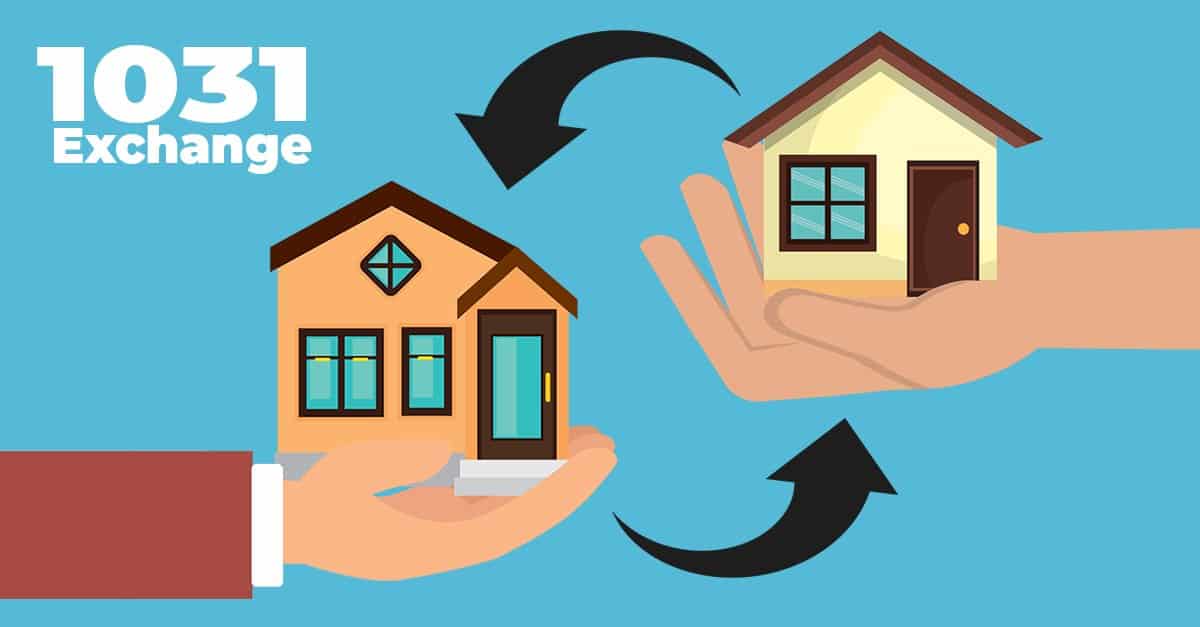
If you own investment or business real estate, chances are you’ve heard the term 1031 exchange thrown around by other investors, CPAs, or real estate agents — often described as one of the most powerful tools in a real estate investment strategy. But what exactly is it, how does it work, and why do so many investors build their entire wealth-building approach around it?
This guide breaks down everything you need to know about a 1031 exchange: what qualifies, the strict deadlines involved, the rules for identifying replacement property, and the practical ways investors use this strategy to grow their portfolios while legally deferring taxes.
What Is a 1031 Exchange?
A 1031 exchange, named after Section 1031 of the Internal Revenue Code, allows real estate investors to sell a property held for business or investment purposes and reinvest the proceeds into a new “like-kind” property — all while deferring capital gains tax that would normally be due at the time of sale.
In plain terms: instead of selling a property, paying taxes on the profit, and then reinvesting what’s left, a 1031 exchange lets you roll the full value of your sale into your next investment. The tax isn’t eliminated — it’s deferred, sometimes indefinitely, as long as you keep exchanging into new like-kind property.
It’s important to note that under the Tax Cuts and Jobs Act, Section 1031 now applies only to real property — not personal or intangible property like equipment, vehicles, or collectibles. Primary residences and vacation homes used primarily for personal enjoyment generally don’t qualify either. The property must be held for productive use in a trade, business, or investment.
How a 1031 Exchange Works, Step by Step
A like-kind exchange sounds simple in theory, but the mechanics require precision. Here’s the general process:
- Sell the relinquished property. This is the property you currently own and are giving up.
- Engage a qualified intermediary (QI) before the sale closes. The QI holds the sale proceeds so you never take direct or “constructive” receipt of the cash — a requirement for the exchange to qualify.
- Identify replacement property within 45 days of the sale.
- Close on the replacement property within 180 days of the original sale.
- Report the exchange to the IRS using Form 8824 when you file your tax return for that year.
Skipping or mishandling any of these steps — especially touching the sale proceeds directly — can disqualify the entire exchange and trigger an immediate tax bill.
The Critical Deadlines: 45 and 180 Days
Two deadlines govern every 1031 exchange, and the IRS enforces them strictly, with no extensions for weekends, holidays, or unforeseen circumstances.
The 45-day identification period begins the day the relinquished property closes. Within that window, you must identify potential replacement properties in writing and deliver that identification to your qualified intermediary — not to the seller of the new property. Identification must be unambiguous, typically meaning a specific street address or legal description.
The 180-day exchange period also begins on the closing date of the original property (it runs concurrently with the 45-day window, not after it). You must close on your replacement property, or one of your identified properties, by day 180, or by the due date of your tax return for that year, whichever comes first.
Because these deadlines are so unforgiving, many investors work with a qualified intermediary experienced in tight-timeline transactions and line up backup replacement properties in advance.
Property Identification Rules
Investors aren’t allowed to identify unlimited replacement properties without restriction. The IRS provides three ways to satisfy the identification requirement:
- The Three-Property Rule: You may identify up to three potential replacement properties, regardless of their combined value.
- The 200% Rule: You may identify more than three properties, as long as their combined fair market value doesn’t exceed 200% of the value of the property you sold.
- The 95% Exception: You may identify any number of properties, of any value, but only if you actually acquire at least 95% of the total value identified. This rule is rarely used because it leaves almost no margin for a deal falling through.
Most investors rely on the three-property rule since it offers flexibility without a value cap, giving them backup options if their first choice falls through during due diligence.
What Counts as “Like-Kind” Property?
One of the most misunderstood aspects of a 1031 exchange is the definition of “like-kind.” It does not mean you have to exchange an apartment building for another apartment building, or a warehouse for another warehouse. In real estate, “like-kind” is interpreted broadly: almost any real property held for investment or business use can be exchanged for almost any other, as long as both are located within the United States.
This means an investor could sell raw land and exchange into a multifamily property, or trade a retail strip center for a portfolio of single-family rentals. This flexibility is part of what makes the 1031 exchange such a versatile tool for passive real estate investing and portfolio restructuring.
The Role of the Qualified Intermediary
A qualified intermediary (QI) is a required third party in every 1031 exchange. The QI holds the proceeds from the sale of the relinquished property and uses those funds to acquire the replacement property on the investor’s behalf. This structure ensures the investor never has direct or “constructive receipt” of the sale proceeds, which is essential to preserving the tax deferral.
The IRS disqualifies certain people from acting as your QI, including your attorney, accountant, real estate agent, or employee, or anyone who has acted as your agent within the two years prior to the exchange. Choosing an experienced, properly bonded QI is one of the most important decisions in the entire process, since QI fraud or insolvency has, in rare cases, cost investors their entire exchange proceeds.
Boot: When Part of the Exchange Becomes Taxable
Not every exchange defers 100% of the gain. When an investor receives cash, debt relief, or non-like-kind property as part of the transaction, that portion is called boot in a 1031 exchange, and it’s immediately taxable.
Boot commonly shows up when:
- The replacement property has a lower purchase price than the sale price of the relinquished property.
- The investor takes on less debt on the replacement property than they had on the relinquished property.
- Cash is taken out of the transaction rather than fully reinvested.
To achieve full tax deferral, investors generally need to reinvest all of their net equity and acquire a replacement property of equal or greater value, with equal or greater debt. Any shortfall becomes taxable boot in the year of the exchange.
Depreciation Recapture
Investment real estate depreciates over time, which reduces taxable income annually but also lowers the property’s cost basis. When a property is sold outright, that accumulated depreciation is “recaptured” and taxed, often at a higher rate than standard long-term capital gains.
A properly structured 1031 exchange defers depreciation recapture right along with the capital gains tax. Instead of resetting, the cost basis and depreciation schedule from the relinquished property generally carry over to the replacement property. If boot is received, however, the IRS applies it first against depreciation recapture before any remaining amount is taxed as capital gain — meaning boot can trigger a larger tax hit than investors expect.
Reverse 1031 Exchanges
In a standard exchange, you sell first and buy second. A reverse 1031 exchange flips that order: the investor acquires the replacement property before selling the relinquished one. This can be useful in competitive markets where a desirable property might not wait around for a traditional sale to close first.
Reverse exchanges are more complex and costly to execute, typically requiring an exchange accommodation titleholder (EAT) to hold title to one of the properties temporarily. The same 45-day identification and 180-day completion windows still apply, just measured from the date the replacement property is acquired.
Common Ways Investors Use a 1031 Exchange
Beyond simple tax deferral, investors use like-kind exchanges strategically to:
- Consolidate or diversify a portfolio — trading several smaller properties for one larger asset, or vice versa.
- Upgrade to higher-performing assets — moving from a management-intensive property into a more passive investment, such as a DST investment structured for 1031 exchanges.
- Relocate investments geographically — shifting capital from a declining market into a growing one without a tax penalty.
- Reset depreciation on a larger asset base — acquiring a more valuable replacement property to increase future depreciation deductions.
- Plan for estate transfer — heirs receive inherited property at a stepped-up basis, which can eliminate deferred capital gains entirely as part of broader estate planning with real estate.
Pros and Cons of a 1031 Exchange
Advantages:
- Defers capital gains tax and depreciation recapture, freeing up more capital to reinvest
- Enables portfolio growth and diversification without a tax drag
- Can be repeated indefinitely, compounding wealth over time
- Offers estate planning benefits through a stepped-up basis at death
Drawbacks:
- Strict, unforgiving deadlines with no extensions
- Requires a qualified intermediary and added transaction costs
- Limited to real property held for business or investment use
- Any boot received is immediately taxable
- Finding suitable replacement property within 45 days can be difficult in competitive markets
Common Mistakes to Avoid
Even experienced investors run into trouble with 1031 exchanges. The most frequent missteps include missing the 45-day identification deadline, accidentally taking constructive receipt of sale proceeds, identifying replacement property incorrectly (verbal identification doesn’t count), underestimating the reinvestment amount needed to avoid boot, and failing to line up financing early enough to close within 180 days.
Working with an experienced, qualified intermediary and tax advisor from the very beginning of the process — ideally before you even list the relinquished property — significantly reduces the risk of a failed exchange.
Reporting a 1031 Exchange to the IRS
Every completed exchange must be reported on IRS Form 8824, filed with your federal tax return for the year the relinquished property was sold. This form documents the properties involved, the timeline, any boot received, and the calculation of deferred gain. Because the math involves basis carryover and potential boot, most investors have a tax professional prepare this filing rather than doing it themselves.
Final Thoughts
A 1031 exchange remains one of the most effective tools available to real estate investors for deferring taxes and compounding long-term wealth. But its power comes with real complexity: rigid deadlines, specific identification rules, and technical requirements around qualified intermediaries, boot, and depreciation recapture. Investors who understand these mechanics — and who plan ahead rather than scrambling after a sale closes — are the ones who use this strategy most successfully.
If you’re considering a 1031 exchange, start the conversation with a qualified intermediary and tax advisor well before you list your property. The identification and closing clocks start the moment your sale closes, and there’s no getting that time back.
This article is for informational purposes only and does not constitute tax or legal advice. Consult a qualified tax professional or attorney before entering into a 1031 exchange.